 heurema
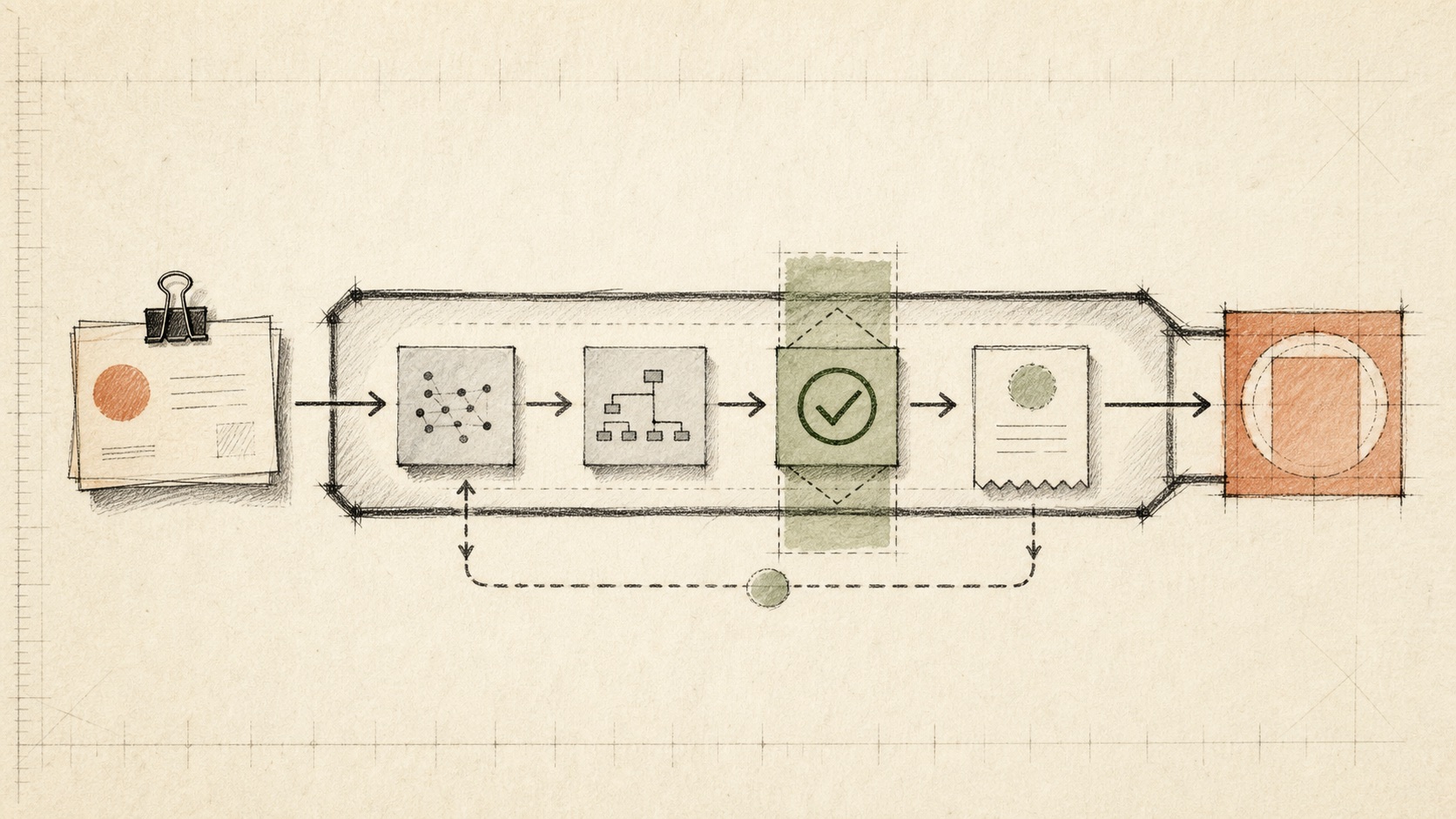
An AI agent can write code, inspect a system, run tools, and prepare a release candidate. Accepting that work still requires an operating contract around the task.
These are the ten constraints I use in the workshop. They are a working standard for tasks where AI participates in implementation. They do not prove that a task belongs with an agent in the first place.
1. A person owns the outcome
Every task begins with an expected result, owner, scope, constraints, and acceptance condition. Implementation starts when the decision is clear enough to test.
2. The environment shapes reliability
The model provides capability. Context, tools, permissions, checks, memory, and handoff rules determine how much of that capability becomes useful work.
3. Authority is explicit
The task names which files, systems, data, and actions are available. Access stays scoped, recorded, revocable, and limited to the current work. A connected tool does not create permission by itself.
4. Start with a bounded result
The first useful unit should fit inside one responsible person's review. A stable single-agent loop comes before longer horizons, broader permissions, or multiple agents.
5. Checks travel with the task
Tests, review criteria, policy checks, and risk gates are visible before implementation. Their results return with the change.
6. Completion includes evidence
A completed task carries the changed artifact, required checks, relevant sources, known limitations, and a clear handoff. A confident status message remains a claim until the evidence can be inspected.
7. People keep consequential decisions
Acceptance, production changes, public actions, payments, credentials, legal commitments, and other high-impact boundaries stay with a responsible person.
8. Stop and rollback are designed early
Failed checks, missing context, an unknown exception, or scope drift pause the work. The task also needs a practical way back to the previous safe state.
9. Outcomes outrank activity
Messages, tokens, runs, and commits show movement. Accepted results, cycle time, rework, escaped errors, review load, and cost per accepted result show whether the work improved.
10. Expansion follows representative evidence
Authority changes one boundary at a time after representative work has passed its checks. New evidence may also narrow the grant or stop the workflow. Reversibility keeps the cost of learning contained.
Put the contract next to the task
The format can be a ticket, repository file, runbook, or task packet. It should contain the following fields.
- expected result and owner
- allowed scope and actions
- sources of truth
- required checks
- human decision points
- stop and rollback conditions
- evidence expected at handoff
The contract gives a reviewer something more useful than confidence. It shows what the agent was allowed to do, what actually happened, which checks passed, and where human responsibility begins.
The same discipline works when a person performs the task. AI simply makes the missing contract visible sooner.